Ghost Plant
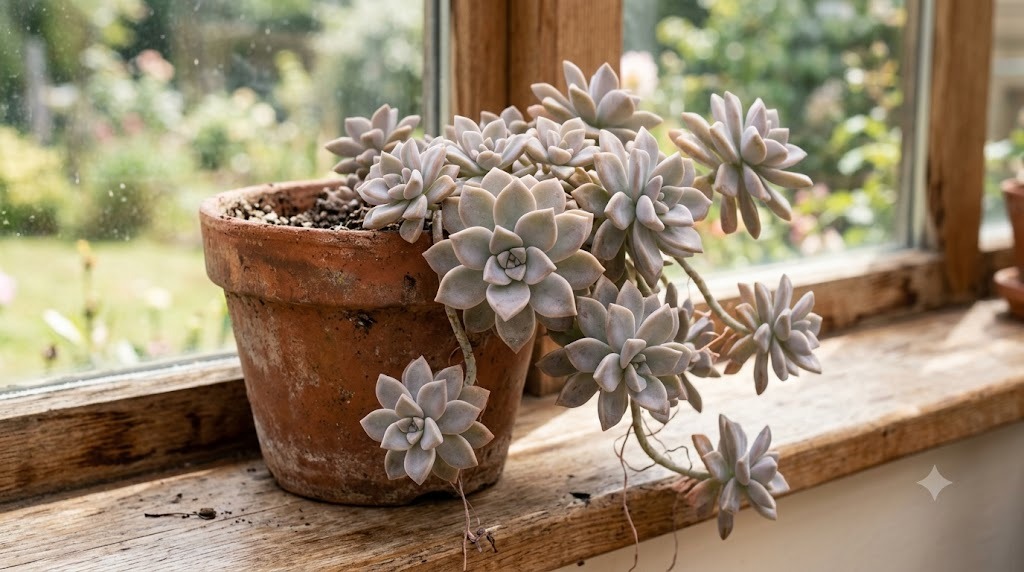
The ghost plant is an easy, fast-growing rosette succulent in soft, ghostly shades of pale grey, lilac, pink and blue, dusted with a chalky bloom.
Last reviewed: July 2026
Overview
The ghost plant is an easy, fast-growing rosette succulent in soft, ghostly shades of pale grey, lilac, pink and blue, dusted with a chalky bloom. Tough, forgiving and endlessly easy to propagate from a dropped leaf, it is a superb beginner succulent that trails and clusters with age.
Origin & Natural Habitat
Graptopetalum paraguayense comes from Mexico, growing on rocky cliffs and slopes. It is one of the most forgiving and adaptable succulents, tolerating more neglect and a wider range of conditions than many of its relatives.
Appearance
Rosettes of plump, pointed, fleshy leaves coated in a pale, powdery bloom that shifts between grey, lilac, pink, blue and yellow depending on light and season. Stems lengthen and trail or sprawl with age, forming clusters of rosettes.
Why People Love It - Qualities & Benefits
People love the dreamy pastel colours, the ease of care, and how effortlessly it multiplies - a single fallen leaf becomes a new plant. It is one of the best 'starter' succulents and a favourite for arrangements.
Care
Light
Bright light with some direct sun brings out the best pastel colours and keeps the rosettes tight - a sunny windowsill is ideal. In low light it greens up, stretches and loses its bloom.
Watering
Soak when the soil is fully dry, then wait; the leaves plump when watered and pucker when thirsty, telling you when to soak. Keep drier in winter. It tolerates drought far better than overwatering.
Soil & Potting
A gritty, free-draining succulent mix in a pot with drainage. Sharp drainage keeps the roots healthy and the rosettes firm.
Humidity & Temperature
Warm, dry air suits it; ordinary room air is fine. Keep it above about 5°C; the powdery bloom is best preserved by avoiding handling and overhead watering.
Feeding
A dilute succulent feed once or twice in the growing season is ample. It grows well on lean soil and needs little feeding.
Repotting
Repot every year or two in spring as it spreads. Handle gently to avoid rubbing off the bloom, and be ready to pot up the many offsets and dropped-leaf babies.
Propagation
Exceptionally easy: a whole leaf that drops (or is gently removed) will root and form a new rosette on the soil surface with almost no effort. Stem cuttings root just as readily after callusing.
Common Problems & Pests
Overwatering rot is the main risk. Mealybugs can hide among the leaves. Handling rubs off the attractive bloom (harmless but cosmetic). Stretching and greening mean too little light.
Toxicity & Safety
The ghost plant is generally considered non-toxic and is one of the safer succulents around pets and children, though as with any plant it is best not to let animals chew it.
Pros & Cons
Pros: lovely pastel colours, extremely easy and forgiving, propagates from a single leaf, tolerant of neglect. Cons: needs good light for colour, the powdery bloom rubs off if handled, rots if overwatered.
Best Suited For
An ideal first succulent and a favourite for hanging pots and arrangements - forgiving, colourful, and endlessly easy to multiply and share.
FAQ
A leaf fell off - can I grow a new plant? Yes - lay it on gritty soil and it roots into a new rosette with almost no effort.
Why has mine gone green and leggy? Too little light - move it somewhere brighter and the colour and tight form return in new growth.
Gear for growing ghost plant
Links go to Amazon or a partner store (such as Adagio Teas) and may earn us a commission at no extra cost to you. As an Amazon Associate we earn from qualifying purchases. We link gear types, not sponsors' picks: you choose the exact product.