Dragon Fruit Cactus
The dragon fruit cactus is the climbing, sprawling cactus behind the vivid pink pitaya you see in shops.
Last reviewed: September 2026
 AI illustration
 Overview
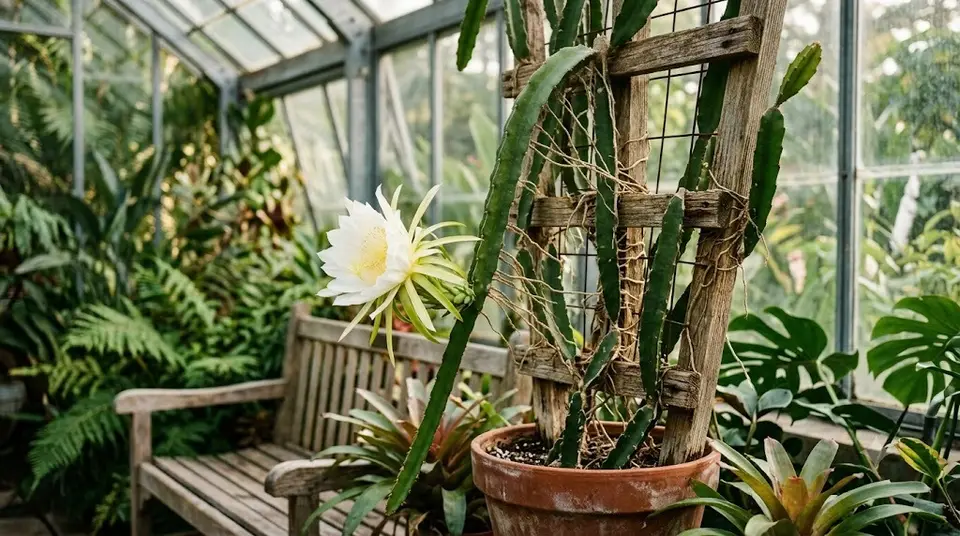
The dragon fruit cactus is the climbing, sprawling cactus behind the vivid pink pitaya you see in shops. A vigorous tropical vine with three-sided green stems and aerial roots, it produces enormous, fragrant white flowers that open for a single night - and, on mature plants given support and warmth, the striking edible fruit itself.
Origin & Natural Habitat
Hylocereus undatus is a tropical, partly epiphytic cactus native to Central America and southern Mexico, where it climbs trees and rocks by aerial roots. Its jungle origins mean it likes more warmth, moisture and support than a desert cactus.
Appearance
Long, sprawling, three-sided (triangular) fleshy green stems with wavy ribs and short spines, sending out aerial roots that grip and climb. Given room and maturity it produces huge, fragrant, creamy-white flowers that open for just one night, followed by the bright pink, scaly, edible dragon fruit.
Why People Love It - Qualities & Benefits
People love growing the plant behind a famous fruit, the dramatic one-night flowers, the fun of climbing tropical growth, and the possibility - with patience, warmth and a second plant for pollination - of home-grown pitaya. It is a vigorous, rewarding project cactus.
Care
Light
Bright light with some direct sun - a very sunny window, a conservatory, or outdoors in warm weather. Good light drives strong growth and, eventually, flowering; too little gives weak, thin, floppy stems. Protect from the most scorching midday glare, reflecting its part-jungle origins.
Watering
Water more than a desert cactus during active growth - keep the soil lightly moist but never waterlogged, letting the surface dry between drinks. Reduce in winter. Its tropical roots like moisture but still rot if kept soggy.
Soil & Potting
A free-draining but slightly richer cactus mix with some organic matter suits its epiphytic climbing nature, in a pot with drainage and a support or trellis to climb.
Humidity & Temperature
Enjoys warmth and moderate humidity, more than desert cacti. Keep it warm (above about 10°C, and ideally much warmer for growth and fruit) and give it something sturdy to climb.
Feeding
Feed regularly through the growing season with a cactus or balanced fertiliser to fuel its vigorous growth, and a flowering feed helps if you are aiming for fruit.
Repotting
Repot every year or two in spring as it grows fast, into a larger pot with fresh mix and a stout support. Handle the heavy stems with care; they carry short spines.
Propagation
Extremely easy from stem cuttings: cut a section of stem, let the cut end callus for a week or so, and set it in gritty mix to root. Cuttings flower and fruit sooner than seed-grown plants.
Common Problems & Pests
Overwatering and cold cause stem rot, the main dangers. Without support the heavy stems sprawl and won't flower well. To set fruit, many need a second plant and hand-pollination of the night flowers, and real maturity, warmth and light. Mealybugs and scale can appear.
Toxicity & Safety
The dragon fruit cactus is not toxic to people or pets - its fruit is famously edible - but its stems carry short spines, so site it out of the way of children and animals and handle with a little care.
Pros & Cons
Pros: the plant behind edible dragon fruit, dramatic one-night flowers, vigorous and easy from cuttings, fun climbing project. Cons: gets large and needs sturdy support, fruit needs maturity, warmth and often hand-pollination, rots if cold and wet.
Best Suited For
A rewarding project for anyone with a warm, very bright spot who wants a vigorous tropical climber - and the patience to chase its spectacular night flowers and, maybe, home-grown pitaya.
FAQ
Will it fruit indoors? Possibly, with real maturity, warmth, strong light, support, and often a second plant plus hand-pollination of the night flowers.
Why are the stems thin and floppy? Usually too little light or no support - give it a sunny spot and a trellis to climb.
Gear for growing dragon fruit cactus
Links go to Amazon or a partner store (such as Adagio Teas) and may earn us a commission at no extra cost to you. As an Amazon Associate we earn from qualifying purchases. We link gear types, not sponsors' picks: you choose the exact product.