Desert Rose
The desert rose is a spectacular caudex succulent that swells into a fat, sculptural, bottle-like trunk topped with glossy leaves and trumpet-shaped flowers in vivid pink, red and white.
Last reviewed: July 2026
Overview
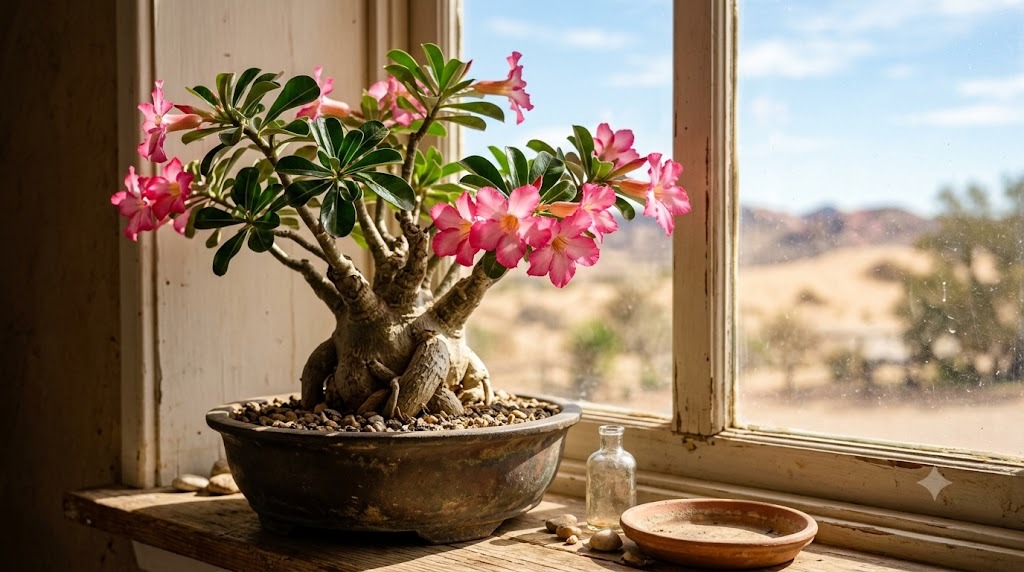
The desert rose is a spectacular caudex succulent that swells into a fat, sculptural, bottle-like trunk topped with glossy leaves and trumpet-shaped flowers in vivid pink, red and white. Part succulent, part living bonsai, it is a stunning statement plant for a hot, bright spot - but its sap is toxic, so it needs a careful home.
Origin & Natural Habitat
Adenium obesum is native to the hot, dry regions of East Africa and the Arabian Peninsula, where it stores water in a swollen trunk (caudex) to survive intense heat and long drought. It needs real warmth and sun to thrive.
Appearance
A thick, swollen, often twisted grey trunk (caudex) tapering to slender branches, topped with clusters of glossy green leaves and showy, trumpet-shaped flowers in shades of pink, crimson, white and bicolours. In cool or dry spells it may drop its leaves and rest. The whole plant has a natural, bonsai-like sculptural quality.
Why People Love It - Qualities & Benefits
People love the dramatic fat trunk, the profuse trumpet flowers, and the way it can be grown and shaped like a flowering living bonsai. It is a bold, exotic, long-lived statement plant for those who can give it heat and light.
Care
Light
Give the most sun you can - a hot, south-facing window with hours of direct sun, or outdoors in warm weather. Strong light and warmth are essential for flowering and a firm trunk; in poor light it grows weak, pale and shy to bloom.
Watering
Water generously when in active growth and the soil has dried, but let it dry out well between drinks - the swollen trunk stores water and rots if kept soggy. Cut back sharply in winter or any cool, dim rest period, when it may drop its leaves and want to stay nearly dry.
Soil & Potting
A gritty, very free-draining cactus or succulent mix in a pot with drainage. Sharp drainage is vital to protect the water-storing trunk and roots from rot.
Humidity & Temperature
Loves warmth and tolerates dry air; it is decidedly frost-tender and resents cold. Keep it well above about 10°C at all times, and warmer for active growth and flowering. Cold, wet conditions are dangerous.
Feeding
Feed with a dilute balanced or flowering fertiliser through the warm growing season to support the blooms. Stop feeding in winter or during any rest period.
Repotting
Repot every couple of years in spring, often raising the caudex slightly each time to show off the swollen trunk. Handle with care and wash hands afterwards because of the toxic sap. Wait a few days before watering after repotting.
Propagation
Usually grown from seed, which gives the fattest, most natural caudex. Cuttings root but rarely form a good swollen trunk. Whichever you choose, handle the toxic sap carefully and wash up afterwards.
Common Problems & Pests
Overwatering and cold cause trunk and root rot, the main killers. Aphids, mealybugs and spider mite can attack the soft new growth and buds. Leaf drop in a cool or dry spell is normal seasonal rest, not necessarily a problem.
Toxicity & Safety
The desert rose is toxic: its milky sap contains cardiac glycosides and is poisonous to pets and people if eaten, and the sap can irritate skin and eyes. Keep it well out of reach of children and pets, wash your hands after pruning or repotting, and if any part is swallowed, seek medical or veterinary help. This is a plant to enjoy at a safe height in a pet-aware home.
Pros & Cons
Pros: spectacular swollen trunk and trumpet flowers, grows like a living bonsai, long-lived, drought-tolerant. Cons: toxic sap (pets, children, skin), needs real heat and strong light, frost-tender, rots if cold and wet.
Best Suited For
A stunning statement plant for a hot, sunny window and a warm home, best for growers who can give it heat and light and keep its toxic sap safely away from children and pets.
FAQ
Is the desert rose poisonous? Yes - its milky sap contains cardiac glycosides and is toxic to pets and people if eaten; handle with care and keep out of reach.
Why did it drop all its leaves? Usually a normal rest in a cool or dry spell; keep it warmer, brighter and just-moist and it releaves in growth.
Gear for growing desert rose
Links go to Amazon or a partner store (such as Adagio Teas) and may earn us a commission at no extra cost to you. As an Amazon Associate we earn from qualifying purchases. We link gear types, not sponsors' picks: you choose the exact product.