Brain Cactus
The brain cactus is a crested mutation of the ladyfinger cactus whose stems grow in waving, folded ridges instead of straight fingers - the result looks uncannily like a little green brain.
Last reviewed: October 2026
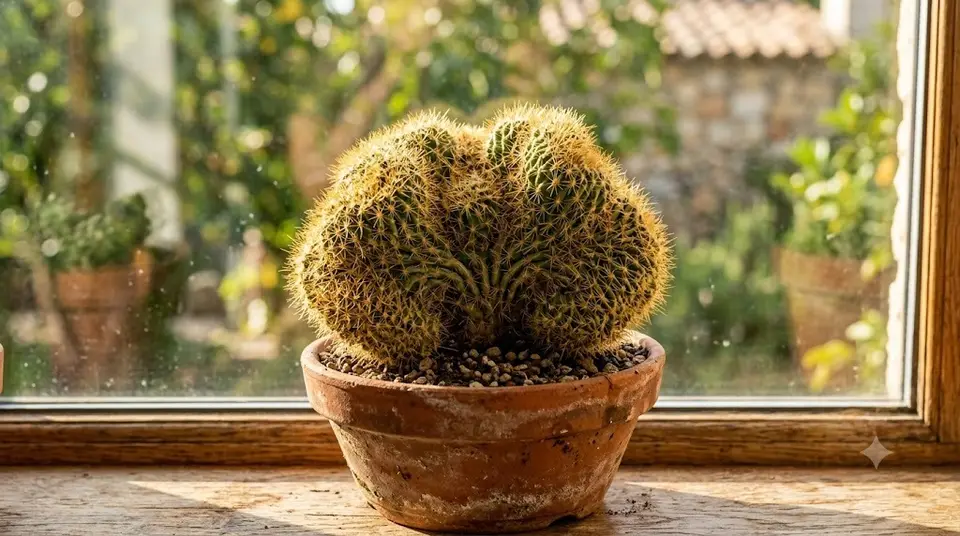 AI illustration
 Overview
The brain cactus is a crested mutation of the ladyfinger cactus whose stems grow in waving, folded ridges instead of straight fingers - the result looks uncannily like a little green brain. Each one is unique, and beyond its strange looks it is as easy as the mammillaria it comes from.
Origin & Natural Habitat
Mammillaria elongata 'Cristata' is a crested (fasciated) form of the Mexican ladyfinger cactus: instead of growing from a point, the stem tip grows in a line, folding the body into ridges. The mutation is stable in cultivation and propagated by cuttings.
Appearance
A low mound of sinuous, tightly folded ridges covered in short golden to bronze spines - a convincing brain made of cactus. Forms vary from a few waves to densely convoluted domes; occasionally a section reverts to normal straight fingers.
Why People Love It - Qualities & Benefits
People love it because no two are alike and the brain look is an instant conversation starter. It stays compact, needs little, and brings personality to a small pot.
Care
Light
Bright light with some direct sun keeps the ridges tight and well-coloured - a sunny windowsill is ideal. Stretching in shade ruins the compact folds.
Watering
Soak, then let the soil dry out completely. Water carefully around, not over, the folds - moisture trapped in the crevices is the classic way to rot a crest. Keep nearly dry in winter.
Soil & Potting
A very gritty, sharply draining cactus mix in a pot with drainage. Many growers add extra grit precisely because crests are more rot-prone than normal stems.
Humidity & Temperature
Warm, dry air suits it; humidity lingering in the folds is its enemy. Ordinary dry room air is ideal; cool, dry, frost-free winter rest.
Feeding
A dilute cactus feed once or twice in the growing season is plenty for this slow, compact form.
Repotting
Repot every few years in spring, handling the brain gently with folded card. Trim away any normal straight stems that appear if you want to keep the pure crested look.
Propagation
By cuttings of crested sections: callus a piece for several days, then set it on gritty soil. Seed does not reproduce the crest reliably, because the crest is a propagated mutation.
Common Problems & Pests
Rot starting in the folds from trapped water is the main danger - water the soil, keep the crest dry, and give airflow. Mealybugs love the crevices; check them. Reversion to normal fingers is common and harmless: prune to taste.
Toxicity & Safety
The brain cactus is not toxic to people or pets, but its spines can prick - keep out of reach and handle with care.
Pros & Cons
Pros: utterly distinctive, every plant unique, compact, easy mammillaria care. Cons: folds trap water and rot if wetted, pests hide in crevices, may revert to straight stems.
Best Suited For
A quirky, compact collector's piece for a bright dry windowsill - ideal for anyone who likes their plants a little strange.
FAQ
Why is a straight finger growing out of my brain? That's reversion to the normal form - snip it off if you prefer the pure crest.
How should I water it? Around the plant, onto the soil - never over the folds, where trapped water causes rot.
Gear for growing brain cactus
Links go to Amazon or a partner store (such as Adagio Teas) and may earn us a commission at no extra cost to you. As an Amazon Associate we earn from qualifying purchases. We link gear types, not sponsors' picks: you choose the exact product.