Serissa Bonsai Care
Serissa japonica
The serissa, or 'tree of a thousand stars', is a flowering indoor bonsai smothered in tiny white blooms - beautiful but famously fussy, sulking and dropping leaves at any sudden change.
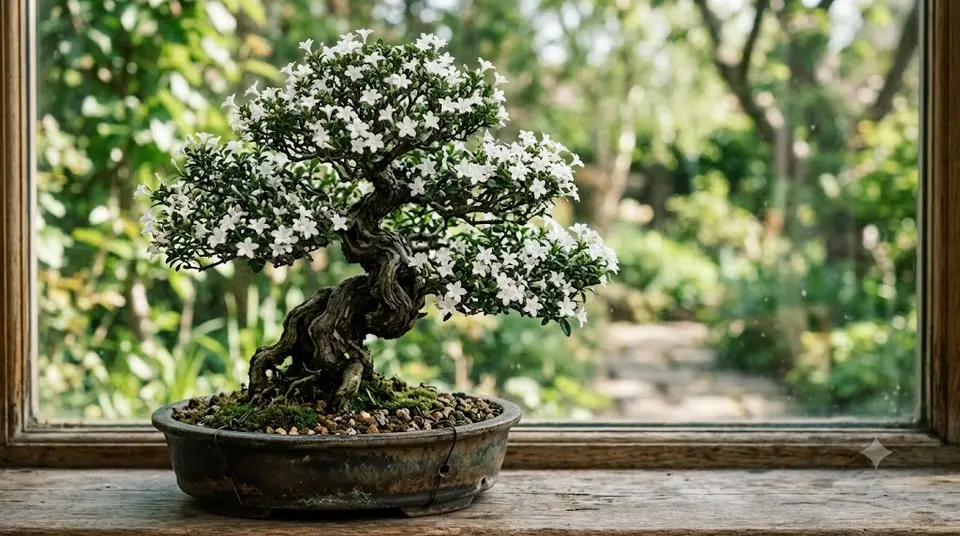
The serissa is called the 'tree of a thousand stars' for the tiny white flowers that can smother it for much of the year, over a gnarled, characterful trunk. It is one of the most rewarding flowering indoor bonsai - and one of the most temperamental. Serissa hates change of any kind and shows its displeasure by dropping leaves. Get its conditions steady and it is a little jewel; chop and change and it will sulk.
Overview
A small evergreen flowering shrub famous for tiny white star-shaped flowers and a gnarled trunk. Lovely but notoriously fussy - it resents any sudden change and drops leaves to protest.
Light & position
Bright light (a sunny windowsill), and stable conditions above all. Once it is happy somewhere, do not move it; changing its position, light or routine is the fastest way to make it drop its leaves.
Watering
Keep the soil consistently, evenly moist - not soggy, not bone dry. Erratic watering is a classic trigger for leaf drop. Water when the surface just begins to dry, and aim for steadiness.
Pruning & shaping
Trim and pinch through the growing season to build ramification and shape; it back-buds well. Note that cut roots and bark give off an unpleasant smell - this is normal for serissa.
Wiring
The wood is somewhat brittle, so wire young shoots gently and shape largely by pruning. Take care not to snap branches.
Repotting & soil
Repot every 2 years in spring into free-draining bonsai soil, trimming roots modestly. It can sulk after repotting, so keep conditions especially steady afterwards.
Feeding
Feed regularly but at modest strength through the growing season to support the long flowering. Ease off in winter.
Winter & seasonal care
A subtropical tree: keep it indoors above about 12-15°C in winter, bright and away from cold draughts and radiators. Consistency, again, is everything.
Common problems & pests
Leaf drop from any sudden change (position, light, watering, temperature, draughts) is the defining serissa complaint; keep everything steady and it recovers. Aphids, and root rot from soggy soil, can also strike.
FAQ
Why does my serissa keep dropping its leaves? Almost always a change of conditions - keep its position, light and watering steady and it settles.
Why does it smell when I prune it? Cut serissa roots and bark naturally give off an unpleasant odour; it's harmless.
Bonsai tools and training wire are sharp - keep them away from children. Some bonsai species (and their sap, leaves or seeds) are toxic to pets if chewed; check before keeping one where animals reach. This is general growing guidance; specifics vary by climate and individual tree.
Kit for bonsai work
Links go to Amazon or a partner store (such as Adagio Teas) and may earn us a commission at no extra cost to you. As an Amazon Associate we earn from qualifying purchases. We link gear types, not sponsors' picks: you choose the exact product.