Satsuki Azalea Bonsai Care
Rhododendron indicum
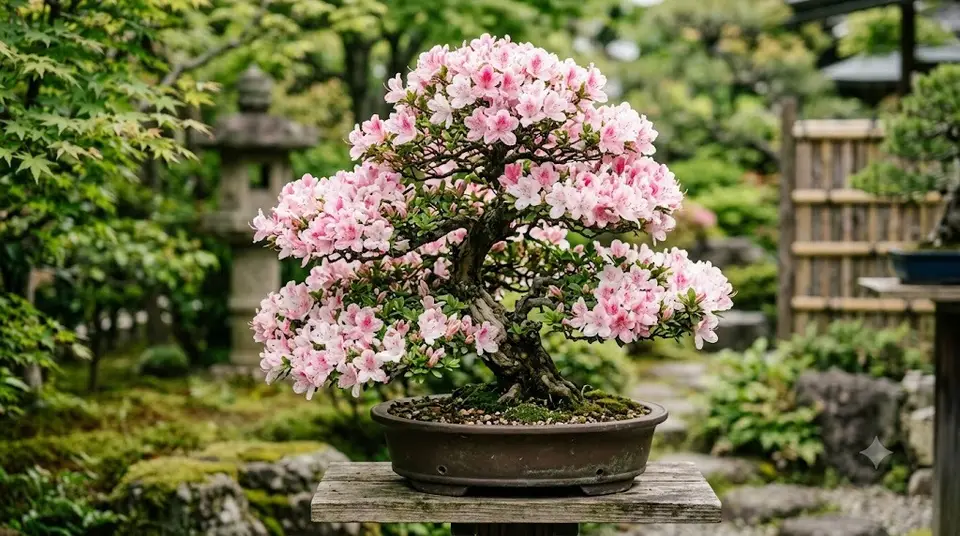
The satsuki azalea is the most spectacular flowering bonsai, smothering itself in late-spring blooms - an outdoor tree that wants acidic soil, soft water and careful post-flowering pruning.
This species needs to live outdoors with real seasons - including a cold winter rest. Kept indoors it declines and slowly dies. It is one of the commonest beginner mistakes, so give it the outdoor life it needs.
When a satsuki azalea flowers, it disappears under a cloud of pink, white and red blooms - no other bonsai puts on such a show. Behind the flowers it is a tough, twiggy shrub with beautiful bark. It has particular needs (acidic soil, rainwater, and pruning timed around flowering), but for that late-spring spectacle it is worth every bit of attention.
Overview
A flowering evergreen bonsai grown above all for its mass of late-spring blooms, in every shade of pink, red and white, often several patterns on one plant. An outdoor tree with acid-loving needs.
Light & position
Bright light outdoors with shade from the harshest midday sun, which can scorch leaves and flowers. Good light is needed for flowering; shelter it during the bloom to make the flowers last.
Watering
Keep the soil consistently moist (azaleas dislike drying out), and use rainwater or soft water where possible, as they hate lime. In hard-water areas, tap water gradually harms them. Never waterlogged, but never bone dry.
Pruning & shaping
Prune structurally right after flowering (early summer), because it sets next year's buds soon after - prune too late and you cut off next year's flowers. Pinch back through summer to build ramification.
Wiring
Azalea wood is brittle and snaps easily, so wire young shoots gently or shape mostly by pruning. Take special care around the base, where multiple trunks are common.
Repotting & soil
Repot every 2-3 years after flowering into acidic, free-draining bonsai soil (kanuma is the classic azalea substrate). They are lime-hating, so the soil and water must stay acidic.
Feeding
Feed with an acidic (ericaceous) fertiliser through the growing season, stopping around flowering and resuming after. Correct, lime-free feeding keeps the leaves green.
Winter & seasonal care
An outdoor tree that is fairly hardy but appreciates protection of the pot from hard frost. Keep it outdoors for its seasons; do not treat it as a houseplant.
Common problems & pests
Yellowing leaves (chlorosis) from lime in water or soil is the classic azalea problem - switch to rainwater and acidic soil. Vine weevil, and petal blight in wet blooms, can occur. Note that azalea (Rhododendron) is highly toxic: all parts contain grayanotoxins and are poisonous to dogs, cats, horses and people, causing vomiting, diarrhea, weakness and potentially cardiac failure, so keep prunings and fallen leaves away from pets and children.
FAQ
Why are the leaves going yellow? Usually lime (hard water or alkaline soil) - azaleas need acidic conditions and soft water.
When do I prune? Right after flowering, or you'll cut off next year's buds.
Bonsai tools and training wire are sharp - keep them away from children. Some bonsai species (and their sap, leaves or seeds) are toxic to pets if chewed; check before keeping one where animals reach. This is general growing guidance; specifics vary by climate and individual tree.
Kit for bonsai work
Links go to Amazon or a partner store (such as Adagio Teas) and may earn us a commission at no extra cost to you. As an Amazon Associate we earn from qualifying purchases. We link gear types, not sponsors' picks: you choose the exact product.