Pomegranate Bonsai Care
Punica granatum
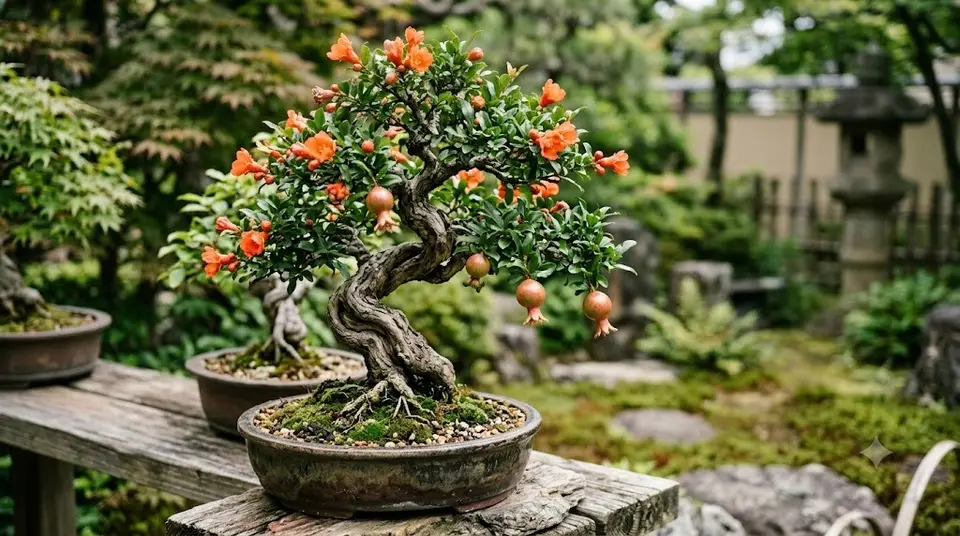
The pomegranate makes a beautiful flowering-and-fruiting bonsai, with vivid orange-red flowers, small fruit and a wonderfully gnarled, twisting trunk - an outdoor tree that loves sun and heat.
This species needs to live outdoors with real seasons - including a cold winter rest. Kept indoors it declines and slowly dies. It is one of the commonest beginner mistakes, so give it the outdoor life it needs.
The pomegranate, especially the dwarf form, is one of the loveliest flowering-and-fruiting bonsai: vivid orange-red trumpet flowers in summer, small ornamental fruit after, glossy leaves that turn gold in autumn, and a trunk that twists and gnarls with age like an old orchard tree. It wants sun and warmth, a proper winter rest, and rewards you with three seasons of interest.
Overview
A deciduous outdoor tree grown for its bright orange-red flowers, small ornamental fruit, gold autumn leaves and beautifully gnarled, twisting trunk. Loves sun and heat; three seasons of interest.
Light & position
Full sun outdoors - essential for good flowering and fruiting and for compact growth. A warm, sheltered, sunny spot is ideal.
Watering
Water thoroughly when the surface begins to dry; keep it well-watered in leaf and fruit through summer heat, but never waterlogged. Reduce once dormant in winter.
Pruning & shaping
Prune structurally in late winter while dormant, and trim through the season. Flowers form on the tips of new short shoots, so avoid shearing off all the new growth if you want blooms and fruit. Gnarled trunks and deadwood suit it.
Wiring
Young shoots wire well; the bark marks, so remove wire in time. The twisting trunk character is a big part of its appeal and is developed over years.
Repotting & soil
Repot every 2-3 years in early spring into free-draining bonsai soil, trimming roots. It recovers well from root work.
Feeding
Feed through the growing season, favouring a flowering/fruiting feed (higher potash) once buds set, to support the blooms and fruit rather than just leaf.
Winter & seasonal care
An outdoor tree that needs winter dormancy; it is reasonably hardy but protect the pot from hard, prolonged frost, especially in colder climates. Do not keep it warm indoors all year.
Common problems & pests
Aphids and whitefly can attack soft growth. Root rot from soggy soil is a danger. No flowers usually means too little sun, or all the flowering shoots were pruned off.
FAQ
Why won't it flower or fruit? Usually too little sun, or the flowering shoot-tips were pruned away - give full sun and prune with the bloom in mind.
Is the fruit edible? The dwarf form's small fruit is ornamental; larger forms can fruit edibly, but on a bonsai it's grown for looks.
Bonsai tools and training wire are sharp - keep them away from children. Some bonsai species (and their sap, leaves or seeds) are toxic to pets if chewed; check before keeping one where animals reach. This is general growing guidance; specifics vary by climate and individual tree.
Kit for bonsai work
Links go to Amazon or a partner store (such as Adagio Teas) and may earn us a commission at no extra cost to you. As an Amazon Associate we earn from qualifying purchases. We link gear types, not sponsors' picks: you choose the exact product.