Olive Bonsai Care
Olea europaea
The olive makes a tough, drought-tolerant bonsai with tiny silvery leaves and a wonderfully gnarled, ancient-looking trunk - a forgiving Mediterranean tree for a bright, sunny position.
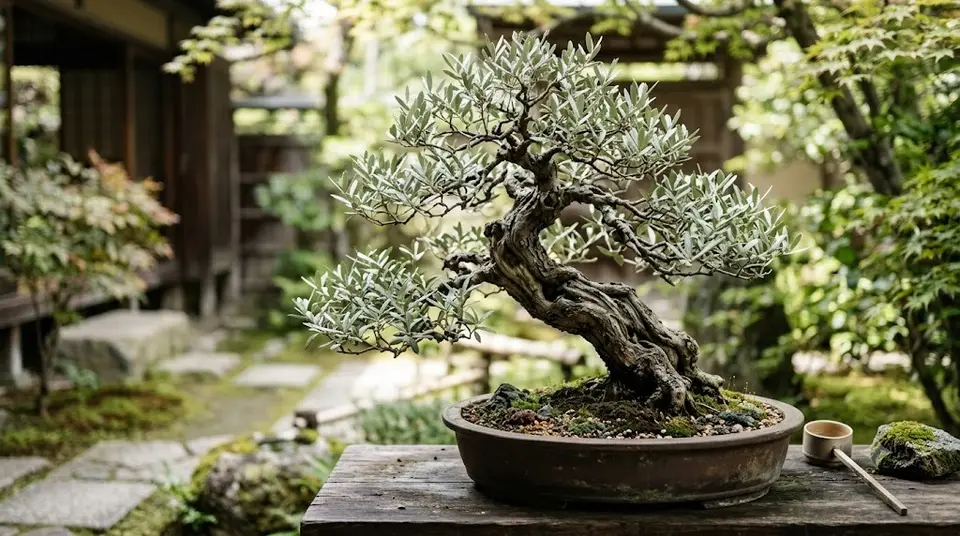
The olive is a gift to bonsai: naturally small leaves, a trunk that turns gnarled and ancient-looking with age, and the toughness of a tree built for hot, dry Mediterranean hillsides. It buds back readily even from old wood, tolerates drought and hard pruning, and takes beautifully to deadwood work. Give it sun and don't overwater it, and it is one of the most forgiving trees you can grow.
Overview
A tough, slow, drought-tolerant evergreen with small silvery-green leaves and characterful bark that ages beautifully. Buds back readily from old wood and takes to deadwood features - forgiving and rewarding.
Light & position
Full sun - the more light the better, which keeps the leaves small and the growth tight. A very bright windowsill indoors, or outdoors in warm weather. In cold-winter climates it can summer outside and winter in a cool bright room.
Watering
Water when the soil begins to dry, thoroughly; then let it dry out somewhat before the next drink. Olives are drought-adapted and far prefer a little dryness to constant wet, which rots the roots.
Pruning & shaping
Prune freely through the growing season - it back-buds strongly, even from old wood, so you can build a full ramified canopy and reduce hard. Its willingness to bud back makes it very forgiving.
Wiring
Branches wire well while young and flexible; older wood is stiff. Deadwood (jin and shari) suits the olive's ancient character. Watch for wire marks.
Repotting & soil
Repot every 2-3 years in spring into free-draining bonsai soil, trimming roots. It tolerates root work well.
Feeding
Feed through the growing season with a balanced feed; it is not greedy, so modest steady feeding suits it. Ease off in winter.
Winter & seasonal care
Fairly hardy but not fully frost-proof in a pot: protect it from hard freezes. Where winters are cold, overwinter it in a cool, bright, frost-free spot. It does need a cooler winter rest rather than warm indoor conditions all year.
Common problems & pests
Root rot from soggy soil is the main danger - err on the dry side. Scale can appear. Leggy growth with larger leaves usually means too little light.
FAQ
Can I keep an olive bonsai indoors all year? Better to give it a cool, bright winter rest and full sun in the growing season; permanent warm indoor conditions weaken it.
Will it bud back on bare old wood? Yes - olives readily bud back from old wood, which makes them very forgiving to prune.
Bonsai tools and training wire are sharp - keep them away from children. Some bonsai species (and their sap, leaves or seeds) are toxic to pets if chewed; check before keeping one where animals reach. This is general growing guidance; specifics vary by climate and individual tree.
Kit for bonsai work
Links go to Amazon or a partner store (such as Adagio Teas) and may earn us a commission at no extra cost to you. As an Amazon Associate we earn from qualifying purchases. We link gear types, not sponsors' picks: you choose the exact product.