Japanese Maple Bonsai Care
Acer palmatum
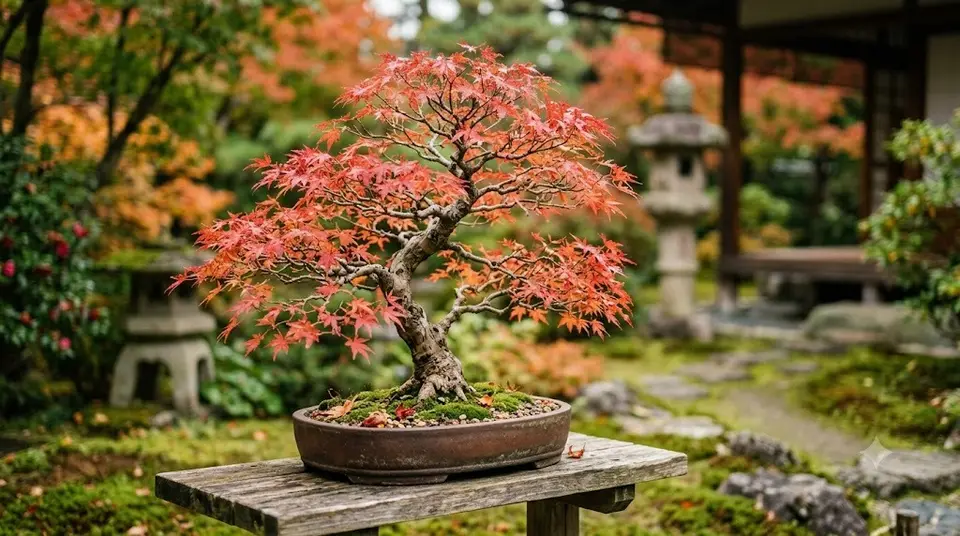
The Japanese maple is a spectacular outdoor bonsai grown for its delicate leaves and fiery autumn colour - it wants a cool climate, shelter from harsh sun and wind, and real seasons.
This species needs to live outdoors with real seasons - including a cold winter rest. Kept indoors it declines and slowly dies. It is one of the commonest beginner mistakes, so give it the outdoor life it needs.
Few bonsai are as beautiful as a Japanese maple in autumn, blazing red and orange, its fine twiggy branches like an old forest tree in miniature. It is an outdoor tree that wants a cool, temperate climate, protection from scorching sun and drying wind, and a proper winter rest. A little more demanding than an elm, but the seasonal show is worth it.
Overview
A deciduous outdoor tree prized for delicate palmate leaves, fine ramification and superb autumn colour. Needs real seasons and some care with sun and wind, but hugely rewarding.
Light & position
Bright light outdoors, but with shade from fierce afternoon sun, which scorches the delicate leaves - morning sun and afternoon shade is ideal. Shelter from strong, drying wind too.
Watering
Keep the soil moist but never waterlogged; maples are thirsty in leaf, so summer watering may be daily or more in heat. Never let it dry out completely in leaf, and reduce watering once dormant in winter.
Pruning & shaping
Prune structurally in late winter while dormant, and pinch/trim through the growing season to build the fine twigginess maples are loved for. Cutting to a pair of buds directs branching.
Wiring
Wire young branches carefully - maple bark is thin and marks easily, so use guy wires or protect the bark, and remove wire before it bites. Much shaping is done by directional pruning.
Repotting & soil
Repot every 1-2 years in early spring just as buds swell, into open, free-draining bonsai soil, trimming the roots. Maples respond well to root work at the right moment.
Feeding
Feed through the growing season with a balanced feed; some growers ease off nitrogen late summer for better autumn colour. Do not feed a dormant tree.
Winter & seasonal care
An outdoor tree that needs winter dormancy - just protect the pot and roots from hard, prolonged freezing and cold drying winds. Do not bring it indoors, which disrupts the dormancy it needs.
Common problems & pests
Leaf scorch (brown, crispy edges) from too much sun, wind or dryness is the common complaint. Aphids, and verticillium wilt, can strike. Root rot from soggy soil is the main real danger.
FAQ
Why are the leaf edges brown and crispy? Leaf scorch - too much sun, wind or dryness; give more shade and shelter and keep it watered.
Can it live indoors? No - it needs real seasons and a cold winter dormancy outdoors.
Bonsai tools and training wire are sharp - keep them away from children. Some bonsai species (and their sap, leaves or seeds) are toxic to pets if chewed; check before keeping one where animals reach. This is general growing guidance; specifics vary by climate and individual tree.
Kit for bonsai work
Links go to Amazon or a partner store (such as Adagio Teas) and may earn us a commission at no extra cost to you. As an Amazon Associate we earn from qualifying purchases. We link gear types, not sponsors' picks: you choose the exact product.