Japanese Black Pine Bonsai Care
Pinus thunbergii
The Japanese black pine is the classic, powerful pine bonsai - rugged bark and dark needles - but an advanced, outdoor tree with specialised needle and candle techniques.
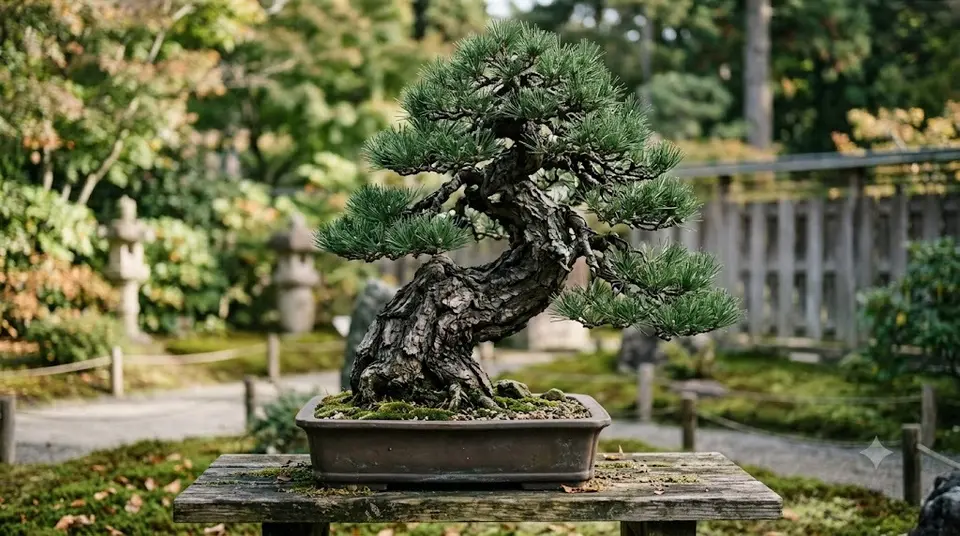
This species needs to live outdoors with real seasons - including a cold winter rest. Kept indoors it declines and slowly dies. It is one of the commonest beginner mistakes, so give it the outdoor life it needs.
The Japanese black pine is the king of masculine bonsai - rugged plated bark, dark green needles, a trunk that radiates strength. It is also an advanced tree: pines have their own specialised techniques (candle-pruning, needle-plucking, two-flush growing) and a slower rhythm than broadleaf trees. An outdoor tree for the committed, and one of the most respected species in the art.
Overview
A hardy evergreen conifer with paired dark needles and superb rugged bark, worked with pine-specific techniques. Rewarding but advanced, and strictly an outdoor tree.
Light & position
Full sun outdoors, all year - pines love as much sun as they can get, which keeps the needles short and the tree healthy. Never indoors.
Watering
Water when the soil begins to dry, in very free-draining soil; pines like it on the drier side and hate wet roots. Slightly restrained watering also helps keep needles short.
Pruning & shaping
This is where pines are specialised: in early summer the new candles are cut ('decandling') to force a second, shorter flush of needles, and old needles are plucked to balance vigour. It is a learned technique, best studied before you start.
Wiring
Pines wire well and hold shape for a long time given their slow growth; wire can stay on longer than on fast trees, but still check it doesn't scar the bark.
Repotting & soil
Repot every 2-4 years in spring into a very free-draining pine mix. Pines resent heavy root reduction, so work the roots conservatively and keep the beneficial root fungi (mycorrhizae).
Feeding
Feed generously through the growing season for vigour (which decandling then controls), easing off to help balance growth. Feeding strategy is part of pine technique.
Winter & seasonal care
Fully hardy; needs a cold winter dormancy outdoors. Shelter only the pot from the very hardest freezes. Never bring it inside.
Common problems & pests
Overwatering and poor drainage cause decline. Adelgids, scale and needle-cast fungus can strike. Long, leggy needles usually mean too little sun or too much water and feed early in the year.
FAQ
Is black pine a beginner tree? No - it needs pine-specific techniques and patience; enjoy easier trees first.
What is decandling? Cutting the new spring candles to force a second, shorter flush of needles - a key black-pine technique.
Bonsai tools and training wire are sharp - keep them away from children. Some bonsai species (and their sap, leaves or seeds) are toxic to pets if chewed; check before keeping one where animals reach. This is general growing guidance; specifics vary by climate and individual tree.
Kit for bonsai work
Links go to Amazon or a partner store (such as Adagio Teas) and may earn us a commission at no extra cost to you. As an Amazon Associate we earn from qualifying purchases. We link gear types, not sponsors' picks: you choose the exact product.