Japanese Beech Bonsai Care
Fagus crenata
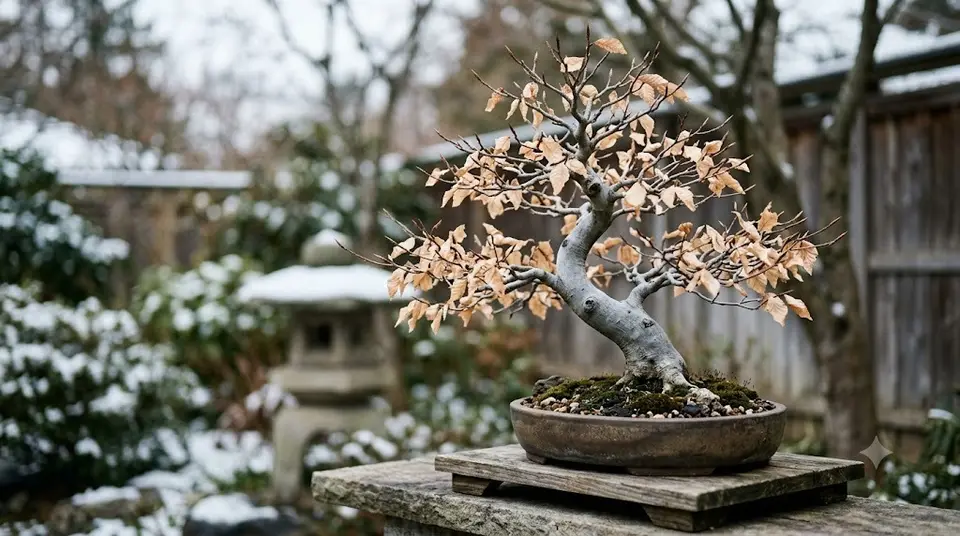
The Japanese beech is a refined, stately deciduous bonsai with smooth silver-grey bark, fresh spring leaves and tan autumn foliage that clings through winter - slow, dignified and rewarding.
This species needs to live outdoors with real seasons - including a cold winter rest. Kept indoors it declines and slowly dies. It is one of the commonest beginner mistakes, so give it the outdoor life it needs.
The Japanese beech is a tree of quiet dignity - smooth silver-grey bark like an elephant's hide, fresh bright leaves unfurling from long pointed buds in spring, and warm tan autumn foliage that often clings to the branches all through winter. It is slower and more deliberate than an elm, making a single strong flush a year, so pruning is a matter of timing and patience. The reward is one of the most stately of all deciduous bonsai.
Overview
A hardy deciduous tree with beautiful smooth grey bark, refined branching and tan autumn leaves that often persist through winter. Slow and dignified, it makes one main flush a year, so it rewards patience.
Light & position
Full sun to light shade outdoors; some afternoon shade in the fiercest heat protects the leaves. An outdoor tree needing real seasons.
Watering
Keep the soil moist but not waterlogged; water thoroughly when the surface starts to dry, often daily in summer. Reduce once dormant.
Pruning & shaping
Because beech makes essentially one flush a year, timing matters: prune structurally in the dormant season, and pinch the single spring flush to guide growth. It ramifies more slowly than an elm, so be patient and deliberate.
Wiring
Young shoots wire well; the smooth bark marks easily, so protect it and remove wire before it bites. Much structure is built by directional pruning over years.
Repotting & soil
Repot every 2-3 years in early spring as the buds swell, into free-draining bonsai soil, trimming roots. It responds well but resents being disturbed too often.
Feeding
Feed through the growing season with a balanced feed; ease off late summer for the best autumn colour and to harden growth.
Winter & seasonal care
Fully hardy and needs winter dormancy; the pale tan leaves clinging through winter are a signature feature (marcescence). Shelter the pot from hard frost. Do not keep it indoors.
Common problems & pests
Leaf scorch in extreme heat and wind, aphids, and beech woolly aphid can occur. Root rot from soggy soil is the main real danger. Otherwise it is a tough, long-lived tree.
FAQ
Why do dead brown leaves stay on all winter? That's marcescence, normal and attractive in beech; fresh spring growth pushes them off.
Why is it slower to ramify than my elm? Beech makes one main flush a year, so building fine branching takes patience and good pruning timing.
Bonsai tools and training wire are sharp - keep them away from children. Some bonsai species (and their sap, leaves or seeds) are toxic to pets if chewed; check before keeping one where animals reach. This is general growing guidance; specifics vary by climate and individual tree.
Kit for bonsai work
Links go to Amazon or a partner store (such as Adagio Teas) and may earn us a commission at no extra cost to you. As an Amazon Associate we earn from qualifying purchases. We link gear types, not sponsors' picks: you choose the exact product.