Flowering Quince Bonsai Care
Chaenomeles
The flowering quince bursts into vivid red, pink, orange or white blooms on bare branches in very early spring - a cheerful, hardy, easy outdoor bonsai that flowers before almost anything else.
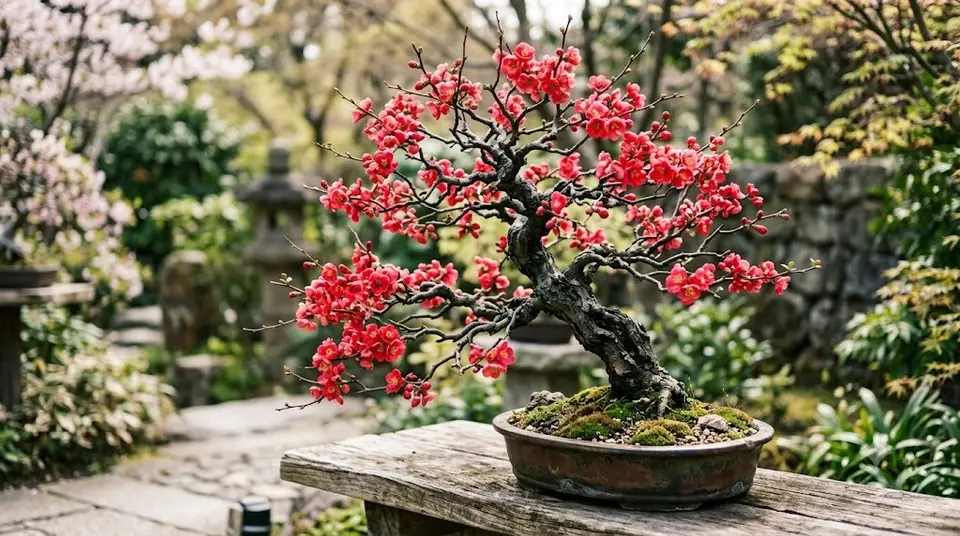
This species needs to live outdoors with real seasons - including a cold winter rest. Kept indoors it declines and slowly dies. It is one of the commonest beginner mistakes, so give it the outdoor life it needs.
The flowering quince is one of the earliest and most cheerful of all flowering bonsai, opening vivid red, pink, orange or white blooms directly on its bare branches while winter is barely over, long before the leaves appear. It is hardy, tough and easy, with small fruit sometimes following the flowers, and it takes hard pruning well. A little thorny and inclined to sucker, but a wonderfully rewarding harbinger of spring.
Overview
A hardy deciduous shrub grown for vivid flowers borne on bare branches in very early spring, sometimes with small fruit after. Tough, easy and cheerful - one of the earliest bonsai to bloom.
Light & position
Full sun outdoors for the best flowering and compact growth. An outdoor tree that needs real seasons.
Watering
Water thoroughly when the surface begins to dry; keep it moist but not waterlogged, and thirsty in summer. Reduce once dormant.
Pruning & shaping
Prune right after flowering, because it sets next year's flower buds on the new growth soon after - prune too late and you cut off next spring's blooms. It back-buds and suckers readily, so it takes hard pruning well.
Wiring
Young shoots wire to shape; watch the thorns and the marking bark. Much shaping is done by pruning, and by managing the suckers into or out of a clump form.
Repotting & soil
Repot every 2-3 years in spring (after flowering) into free-draining bonsai soil, trimming roots and removing excess suckers. It recovers well.
Feeding
Feed through the growing season, favouring a flowering feed (higher potash) to support the blooms rather than just leafy growth.
Winter & seasonal care
Fully hardy and needs winter dormancy; the very early flowers open as winter ends. Shelter the pot from the very hardest, most prolonged frost. Do not keep it indoors.
Common problems & pests
Aphids, scale and fungal leaf spot can occur; fireblight is an occasional serious risk. Root rot from soggy soil is the main danger. Excess suckers can crowd the base if not managed.
FAQ
When do I prune it? Right after flowering - it sets next year's buds soon after, so late pruning removes the coming blooms.
Why are shoots coming up around the base? Quince suckers naturally; remove them, or use them to build a clump or twin-trunk style.
Bonsai tools and training wire are sharp - keep them away from children. Some bonsai species (and their sap, leaves or seeds) are toxic to pets if chewed; check before keeping one where animals reach. This is general growing guidance; specifics vary by climate and individual tree.
Kit for bonsai work
Links go to Amazon or a partner store (such as Adagio Teas) and may earn us a commission at no extra cost to you. As an Amazon Associate we earn from qualifying purchases. We link gear types, not sponsors' picks: you choose the exact product.