Ficus Bonsai Care
Ficus retusa / microcarpa
The ficus is the best beginner indoor bonsai - tough, fast, forgiving, and quick to heal from mistakes, thriving on a bright windowsill with regular watering.
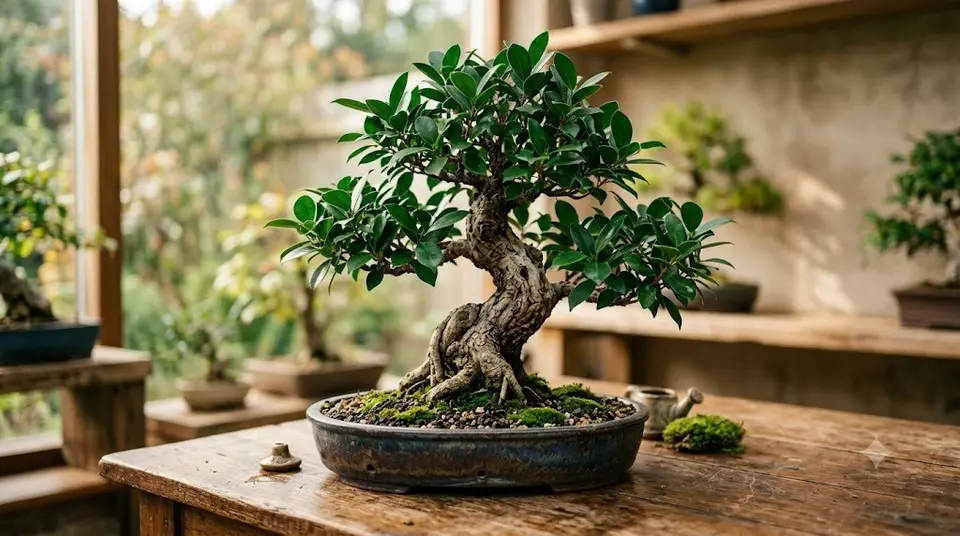
The ficus is the tree most people should start with. Tough, vigorous and forgiving, it grows fast, heals quickly from pruning, and (crucially) actually thrives indoors, unlike most bonsai. The 'ginseng ficus' with its swollen roots and the fig-leaved retusa are the common forms, both near-impossible to kill once you get the watering right.
Overview
An easy, fast-growing indoor bonsai with a thick trunk, aerial roots and glossy leaves. Its speed and toughness make it the ideal first tree - you can practise pruning and wiring without fear.
Light & position
Give it the brightest indoor spot you have (a sunny windowsill), and it can go outside in warm weather. It tolerates lower light better than most bonsai but grows leggy and weak in gloom.
Watering
Water when the surface just starts to dry, thoroughly until it runs out the holes. In a warm bright spot in summer that may be daily; less in winter. Ficus forgive the odd missed watering better than most.
Pruning & shaping
Prune vigorously through the growing season - ficus back-bud readily, so you can cut hard to build ramification. Pinch new shoots back to a couple of leaves. A cut ficus 'bleeds' a white latex sap, which is normal.
Wiring
Wire young, flexible branches to set shape; the fast growth means wire bites in quickly, so check often and remove it before it scars the swelling bark. Older branches are stiff and better shaped by pruning.
Repotting & soil
Repot every 1-2 years in spring into free-draining bonsai soil, trimming the roots. Ficus tolerate root work well. A gritty, open mix keeps the roots healthy.
Feeding
Feed regularly through the growing season with a balanced bonsai or general fertiliser at label strength; ease off in winter. The fast growth is hungry.
Winter & seasonal care
A tropical tree, so keep it indoors above about 15°C in winter, away from cold draughts and radiators. It may drop a few leaves adjusting to lower winter light - normal.
Common problems & pests
Leaf drop from a sudden move, draught or overwatering is the usual complaint - keep conditions stable. Scale and mealybugs can appear indoors. Rot from soggy soil is the real killer, so ensure drainage. Note the ASPCA lists fig (Ficus benjamina, the weeping fig) as toxic to dogs, cats and horses, causing gastrointestinal and skin irritation: treat any ficus the same way and keep the leaves and the latex sap away from pets.
FAQ
Is ficus a good first bonsai? The best - tough, fast and forgiving indoors.
The cut oozes white sap - is that bad? No, that latex is normal; just avoid getting it in eyes or on pets.
Bonsai tools and training wire are sharp - keep them away from children. Some bonsai species (and their sap, leaves or seeds) are toxic to pets if chewed; check before keeping one where animals reach. This is general growing guidance; specifics vary by climate and individual tree.
Kit for bonsai work
Links go to Amazon or a partner store (such as Adagio Teas) and may earn us a commission at no extra cost to you. As an Amazon Associate we earn from qualifying purchases. We link gear types, not sponsors' picks: you choose the exact product.