Cotoneaster Bonsai Care
Cotoneaster
Cotoneaster makes a rewarding, easy outdoor bonsai with small leaves, spring flowers and a display of bright red autumn berries - vigorous, forgiving and great for beginners.
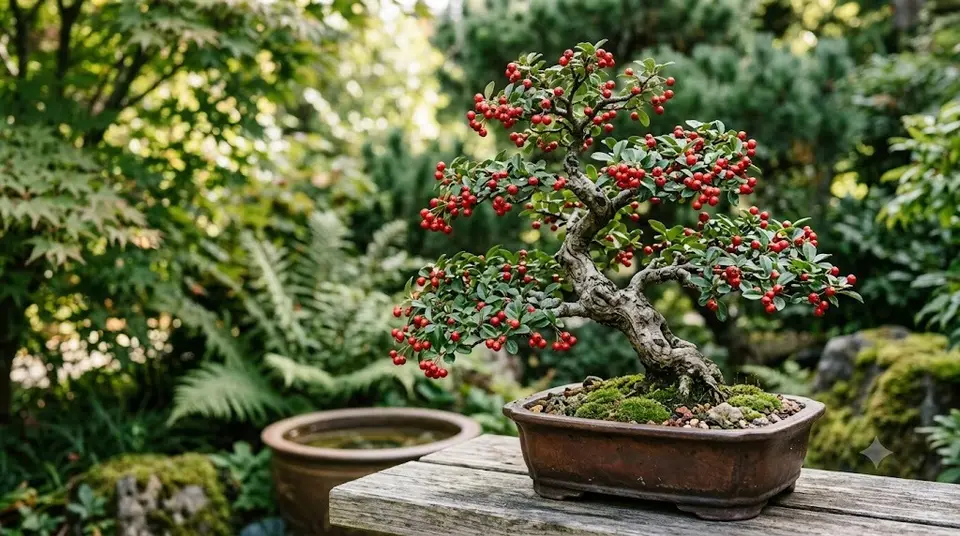
This species needs to live outdoors with real seasons - including a cold winter rest. Kept indoors it declines and slowly dies. It is one of the commonest beginner mistakes, so give it the outdoor life it needs.
Cotoneaster gives you three seasons of interest on an easy, forgiving tree: small glossy leaves, a scatter of white or pink spring flowers, and then a bright display of red berries into autumn and winter. Vigorous and tolerant of hard pruning, it is one of the best flowering-and-fruiting bonsai for a beginner, especially in a cascade over the pot edge.
Overview
An easy, vigorous outdoor shrub with tiny leaves, spring flowers and bright autumn berries. Forgiving and fast, it suits cascades and root-over-rock beautifully.
Light & position
Full sun outdoors gives the best flowering and berrying and keeps it compact. It tolerates some shade but flowers and fruits less.
Watering
Water when the surface begins to dry, thoroughly; keep moist but not soggy. Thirsty in summer; reduce in winter. Fairly forgiving.
Pruning & shaping
Prune hard - it back-buds readily and builds fine ramification fast. To keep berries, prune after flowering rather than removing the developing fruit; a light touch in summer preserves the autumn display.
Wiring
Young shoots wire easily and set quickly; watch for wire marks on the fast-thickening bark. Cascading branches respond well to wiring.
Repotting & soil
Repot every 2-3 years in spring into free-draining bonsai soil, trimming roots. It recovers well from root work.
Feeding
Feed through the growing season; a little extra potash (as in a flowering feed) supports good flowering and berrying.
Winter & seasonal care
Hardy outdoors; the berries persist into winter as a feature. Shelter only the pot from the hardest frost.
Common problems & pests
Aphids, and fireblight (a serious bacterial disease it can catch), are the notable issues. Root rot from soggy soil is the main real risk. Loss of berries usually means a bird got there first.
FAQ
How do I keep the berries? Prune after flowering, not by removing developing fruit, and give full sun.
Is it a good beginner fruiting bonsai? Yes - one of the easiest for flowers and berries.
Bonsai tools and training wire are sharp - keep them away from children. Some bonsai species (and their sap, leaves or seeds) are toxic to pets if chewed; check before keeping one where animals reach. This is general growing guidance; specifics vary by climate and individual tree.
Kit for bonsai work
Links go to Amazon or a partner store (such as Adagio Teas) and may earn us a commission at no extra cost to you. As an Amazon Associate we earn from qualifying purchases. We link gear types, not sponsors' picks: you choose the exact product.