Wisteria Bonsai Care
Wisteria sinensis
Wisteria makes a dramatic flowering bonsai, hung with cascading purple or white flower racemes in spring - a thirsty, hungry outdoor tree grown above all for that spectacular bloom.
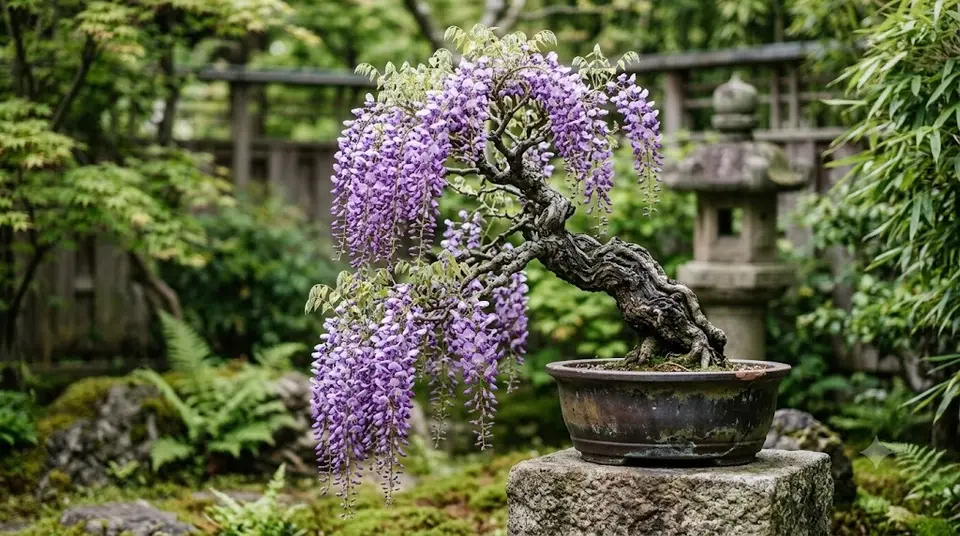
This species needs to live outdoors with real seasons - including a cold winter rest. Kept indoors it declines and slowly dies. It is one of the commonest beginner mistakes, so give it the outdoor life it needs.
A wisteria bonsai in bloom is unforgettable - long racemes of purple or white pea-flowers cascading beneath the branches. It is grown almost entirely for that spring spectacle, and everything about its care serves the flowers. Thirsty, hungry and vigorous, it is an outdoor tree that rewards the right pruning with a breathtaking display.
Overview
A vigorous flowering climber trained as a bonsai for its dramatic hanging flower racemes in spring. An outdoor tree grown above all for the bloom; the foliage is secondary.
Light & position
Full sun outdoors - wisteria needs plenty of light to flower well. A bright, warm, sunny position gives the best display.
Watering
Very thirsty, especially in leaf and flower - wisteria may need heavy, even twice-daily watering in summer heat, and some growers stand the pot in a tray of water during flowering. Reduce in winter.
Pruning & shaping
The key to flowering: cut back the long whippy summer growth hard through the season to concentrate energy into flower buds rather than vine, and prune again in winter. Uncontrolled, it makes vine and few flowers.
Wiring
Young shoots wire to shape the framework; the vigorous growth means wire bites fast, so check often. Much shaping is done by hard, repeated pruning of the rampant growth.
Repotting & soil
Repot every 1-2 years (it is vigorous and fills a pot fast) in spring into free-draining but moisture-retentive bonsai soil, as it is so thirsty.
Feeding
Feed generously through the growing season, but favour phosphorus/potash (a flowering feed) over high nitrogen, which drives leafy vine at the expense of flowers.
Winter & seasonal care
Hardy outdoors and needs winter dormancy; shelter the pot from the hardest frost. The bare winter structure shows off the trunk.
Common problems & pests
Failure to flower - almost always too little pruning of the summer growth, too much nitrogen, or too little sun. Aphids can cluster on soft growth. Note wisteria seeds and pods are toxic if eaten.
FAQ
Why won't my wisteria flower? Usually not enough hard summer pruning, too much nitrogen feed, or too little sun.
How much water does it need? A lot - in summer heat it may need watering twice a day.
Bonsai tools and training wire are sharp - keep them away from children. Some bonsai species (and their sap, leaves or seeds) are toxic to pets if chewed; check before keeping one where animals reach. This is general growing guidance; specifics vary by climate and individual tree.
Kit for bonsai work
Links go to Amazon or a partner store (such as Adagio Teas) and may earn us a commission at no extra cost to you. As an Amazon Associate we earn from qualifying purchases. We link gear types, not sponsors' picks: you choose the exact product.