Why Bonsai Drop Their Leaves
The short answer: most leaf drop is a bonsai reacting to change - a move, a draught, a watering slip - or an outdoor tree being kept indoors. Here is how to tell normal shedding from real trouble, tree by tree.
The short answer: a bonsai that drops leaves is almost always reacting to a change (a new position, a cold draught, a missed watering, or soggy roots), and most of the time it recovers once conditions settle. The two big exceptions are deciduous trees shedding for winter (completely normal) and outdoor species like juniper slowly dying indoors (a classic fatal mistake in bonsai). Work out which of those you are looking at and you know what to do.
First, rule out the normal reasons
Not all leaf drop is a problem:
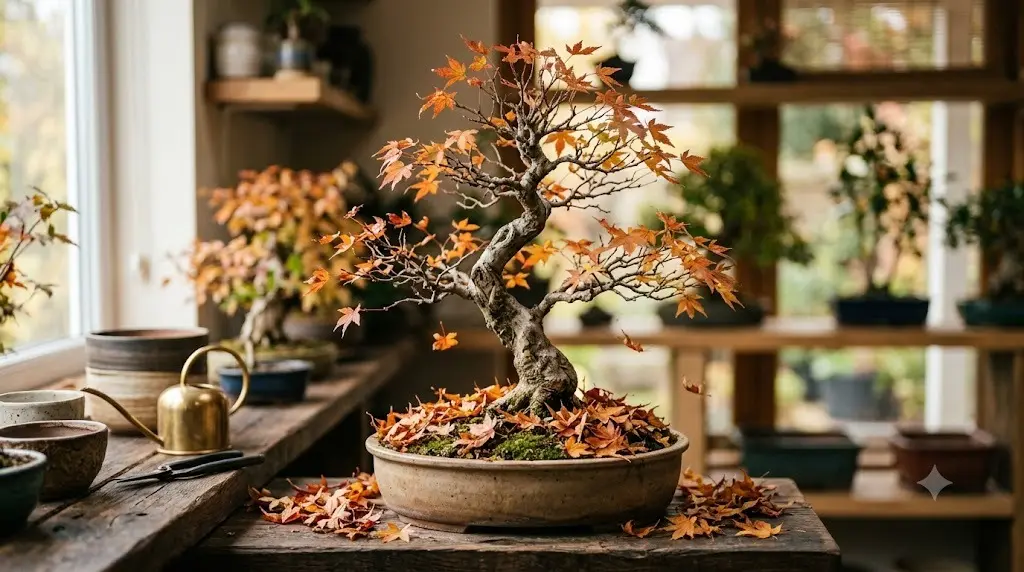
- Deciduous trees shed. Maples, elms (in a cool spot), larch, hornbeam and other deciduous bonsai are supposed to colour up and drop everything in autumn. Bare in December is healthy, not dying.
- New-home sulk. Almost any tree (ficus and sweet plum are famous for it) drops a share of leaves in the first weeks after moving house, changing rooms or coming home from the shop. Steady light, steady water, no fiddling, and new buds follow.
- Winter thinning indoors. Tropical species hold fewer leaves in low winter light. A thinner canopy from November to February is the tree matching its foliage to the energy available.
If your situation fits one of those, the fix is patience.
The stress reasons - and their tells
- Watering slips, both directions. A root ball that dried right out drops crisp leaves fast; constantly soggy soil rots roots and drops soft, yellowing leaves slowly. Feel the soil daily: water when the surface starts to dry, thoroughly, never on a fixed schedule. This single habit prevents a great many bonsai deaths.
- Cold draughts and radiators. Trees parked by an opening winter door or above a radiator drop leaves from the shock of temperature swings. Move the tree, not just the thermostat.
- Too little light. A dim corner slowly starves the tree; it sheds its shaded inner leaves first. Bonsai are windowsill plants at minimum: the brighter, the better for nearly all of them.
- Sudden change of anything. Serissa (the “tree of a thousand stars”) is the extreme case: move it, rotate it, change its watering, and it protests by undressing. With touchy species, consistency is the whole game.
The dangerous one: outdoor trees kept indoors
Junipers, pines, spruce, maples and most other temperate species are outdoor trees. They need real seasons, including a cold winter rest, and they cannot live in a heated room. The cruel part is the timeline: an indoor juniper often stays green for weeks after it has effectively died, then browns all at once. If you have a conifer indoors, move it outside - that is the treatment. Our bonsai catalog marks every tree as indoor or outdoor precisely because this mistake is so common.
A quick test for “dead or dormant”: scratch a tiny sliver of bark on a twig. Green underneath means alive - wait. Brown and dry means that branch is gone.
What to actually do
- Identify your species and check whether it is indoor-tolerant or an outdoor tree: that decides everything else. Each profile in the bonsai catalog covers it.
- Fix the position: bright, draught-free, away from radiators, and outdoors if it is an outdoor species.
- Fix the watering: check daily, water when the surface starts drying, soak until it runs from the drainage holes, never leave it standing in a saucer.
- Then stop. No feeding a stressed tree, no repotting it, no daily relocations. Leaves regrow on a tree whose conditions have stopped changing.
Where this leaves you
Leaf drop is a symptom rather than a disease: it is a bonsai’s only way of saying that something changed. Deciduous shedding and new-home sulks fix themselves; watering and position problems fix quickly once you correct them; and an outdoor tree indoors is the one version where the clock is genuinely ticking. Diagnose which one you have before you change anything, and change only one thing at a time.
Recommended Gear on Amazon
- Bonsai tool set - browse current options and reviews on Amazon.
- Humidity tray - browse current options and reviews on Amazon.
- LED grow light - browse current options and reviews on Amazon.
As an Amazon Associate, we earn from qualifying purchases - at no extra cost to you. This helps us keep producing free, in-depth guides.